Retail chains operate in an environment where customer demand changes rapidly, product assortments continue to expand and supply chains grow increasingly complex. A single forecasting mistake can cascade across hundreds of stores, leading to stockouts, excess inventory, lost sales and frustrated customers.
According to reports, out-of-stock items alone cost retailers approximately $1 trillion globally every year. This is where Business Intelligence (BI) becomes essential. By integrating data from multiple systems and applying predictive analytics, retail chains can forecast demand with significantly higher accuracy, optimize inventory levels and improve operational efficiency.
Modern predictive demand forecasting systems can achieve 85 to 95% forecast accuracy, dramatically improving decision-making across the supply chain. In this blog, we will explore how BI helps retail chains forecast demand and the measurable business outcomes organizations can expect.
Why Demand Forecasting Is Critical for Retail Chains
Demand forecasting is not just an operational task; it is a strategic capability that directly impacts revenue, customer satisfaction and profitability.
Retail chains face two major risks when demand forecasts are inaccurate:
- Stockouts: Products run out when customers want them.
- Overstocking: Inventory accumulates faster than it sells.
Both scenarios are costly. Poor demand forecasting can lead to inventory distortions costing businesses hundreds of billions annually, while excess inventory ties up capital and increases storage costs.
For large retail chains operating across multiple locations, even small forecasting errors can scale into significant financial losses.
What Is Business Intelligence (BI) in Retail Forecasting?
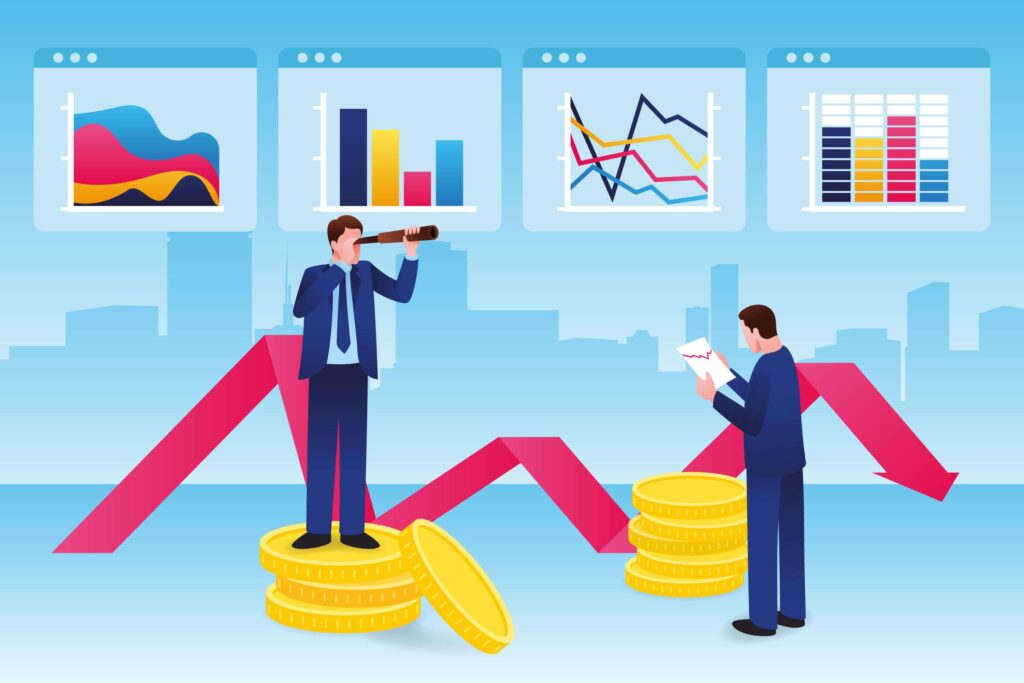
Business Intelligence (BI) refers to the process of collecting, integrating, analyzing and visualizing business data to support decision-making. In retail demand forecasting, BI systems transform data into actionable insights that help organizations predict customer demand more accurately.
Instead of relying on intuition or spreadsheets, modern retailers use BI platforms to analyze:
- Point-of-sale (POS) data
- Inventory levels
- Supplier lead times
- Promotions and discounts
- Customer purchasing behavior
- Seasonal trends
- Regional demand patterns
By centralizing this data, BI provides a single source of truth for forecasting decisions.
How BI Improves Demand Forecasting Accuracy
Business Intelligence improves demand forecasting by enabling real-time visibility and automated decision-making. Below, we have discussed the key ways Business Intelligence helps retail chains make decisions.
Real-Time Data Integration
Retail operations generate massive amounts of data across multiple systems. Without integration, forecasting becomes fragmented and unreliable.
BI platforms consolidate data from:
- POS systems
- ERP systems
- Warehouse management systems
- E-commerce platforms
- Supply chain networks
This integration ensures forecasts reflect the most current demand signals. Real-time synchronization also enables automated inventory ordering and replenishment, reducing carrying costs and improving stock availability across locations.
Historical Data Analysis
Historical data is the foundation of accurate demand forecasting. By analyzing past sales patterns, retailers can identify predictable trends and recurring demand cycles.
Examples include:
- Seasonal demand spikes
- Holiday shopping patterns
- Product lifecycle stages
- Weekly purchasing trends
This capability is particularly valuable for retail chains managing thousands of products across multiple stores.
Predictive Analytics and Machine Learning
Traditional forecasting methods rely on simple averages or manual estimates. Modern BI systems use predictive analytics and machine learning to generate more precise demand forecasts.
These models analyze multiple variables simultaneously, including:
- Sales history
- Promotions
- Weather patterns
- Market trends
- Customer behavior
Predictive demand forecasting systems can reduce stockouts, cut excess inventory and help improve profit margins, enhancing retail performance.
Demand Sensing and Real-Time Forecast Updates
Demand sensing is an advanced forecasting technique that uses recent sales data to detect changes in demand as they happen.
Unlike traditional monthly forecasts, demand sensing continuously updates predictions using:
- Real-time POS data
- Shipment data
- Market signals
This approach allows retailers to respond quickly to unexpected demand shifts and maintain optimal inventory levels. For example, if a product suddenly becomes popular due to a promotion or seasonal event, demand sensing can trigger automatic replenishment before shelves run empty.
Automated Forecasting and Alerts
Modern BI systems automate forecasting processes and provide alerts when demand patterns change.
Examples include:
- Low inventory warnings
- Demand spike notifications
- Supply chain disruption alerts
- Reorder recommendations
Automation reduces manual workload and improves decision-making speed. In fact, organizations using automated forecasting systems can reduce the time spent reviewing forecasts by up to 70%, allowing teams to focus on strategic planning instead of routine tasks.
Forecasting Techniques Used in Retail BI
Retail demand forecasting relies on statistical and machine learning techniques to predict future demand. These methods vary in complexity but share the same goal: improving forecast accuracy.
Time-Series Forecasting
Time-series forecasting analyzes historical data to predict future demand trends.
It is commonly used for:
- Seasonal products
- Recurring demand patterns
- Sales trend analysis
Regression Analysis
Regression models identify relationships between variables that influence demand.
Examples include:
- Price changes
- Promotional campaigns
- Weather conditions
- Economic factors
By understanding these relationships, retailers can make more accurate predictions.
Moving Averages
Moving averages smooth out fluctuations in sales data and help identify underlying demand patterns. This method is widely used for short-term forecasting.
Machine Learning Models
Machine learning models adapt to changing demand patterns and continuously improve forecasting accuracy. These models can analyze large datasets across multiple stores and products, enabling more precise demand predictions.
Even small improvements in forecast accuracy can have a significant financial impact on inventory planning and supply chain performance.
Benefits of High-Accuracy Demand Forecasting for Retail Chains
Accurate demand forecasting delivers measurable operational and financial benefits for retail organizations.
Reduced Stockouts
Accurate forecasts ensure products are available when customers need them, improving customer satisfaction and reducing lost sales. Retailers using advanced forecasting systems can prevent up to 65% of stockouts, significantly improving service levels.
Optimized Inventory Levels
Accurate demand predictions help retailers maintain the right inventory levels across stores. This reduces excess inventory and frees up working capital.
Lower Operational Costs
Data-driven forecasting reduces emergency shipments, storage costs and manual inventory adjustments. Organizations implementing demand forecasting systems can reduce inventory costs, improving financial efficiency.
Improved Supply Chain Efficiency
Demand forecasting enables better coordination between suppliers, warehouses and stores. This improves inventory flow and reduces supply chain disruptions.
Accurate forecasting also helps retailers align inventory levels with actual demand, improving operational efficiency and customer satisfaction.
Higher Profit Margins
Better forecasting leads to fewer markdowns, reduced waste and improved inventory turnover. Retailers using predictive demand forecasting systems can achieve margin improvements of 3–5 percentage points, demonstrating the direct financial impact of accurate planning.
Best Practices for High-Accuracy Demand Forecasting
Retail chains can significantly improve forecasting accuracy by following proven best practices.
- Centralize Data into a BI Platform: Integrate data from all systems into a unified analytics environment.
- Use Real-Time Data Integration: Update forecasts continuously based on current demand signals.
- Monitor Forecast Accuracy Regularly: Track performance metrics and refine forecasting models.
- Incorporate External Data Sources: Use weather, holidays and market trends to improve predictions.
- Automate Forecasting Processes: Reduce manual workload and improve decision-making speed.
These practices help organizations build reliable forecasting systems that support long-term growth.
How Technoforte Can Help Retail Chains Improve Demand Forecasting
At Technoforte, we help retail chains transform raw operational data into actionable insights through advanced Business Intelligence and analytics solutions.
We also utilize predictive analytics and customizable BI dashboards to help retailers anticipate demand fluctuations and optimize inventory planning. With us, businesses get clear insights into sales trends, forecast accuracy and inventory performance, enabling proactive planning and faster decision-making.
As a result, Technoforte can help businesses reduce stockouts, control inventory costs and improve overall operational efficiency.
Conclusion
Business Intelligence enables retailers to forecast demand with high accuracy by integrating data, applying predictive analytics and automating decision-making processes. Organizations that invest in BI-driven forecasting systems can achieve measurable results, including reduced inventory costs, fewer stockouts and higher profit margins.
At Technoforte, we can help out retailers looking to strengthen their forecasting capabilities. Connect with us to learn how our experienced BI solution professionals deliver scalable analytics platforms for modern retail operations.
Email: sanjay@technoforte.co.in, subrat.kumar@technoforte.co.in